Dealer in Rare and First-Edition Books: Western Americana; Mystery, Detective, and Espionage Fiction
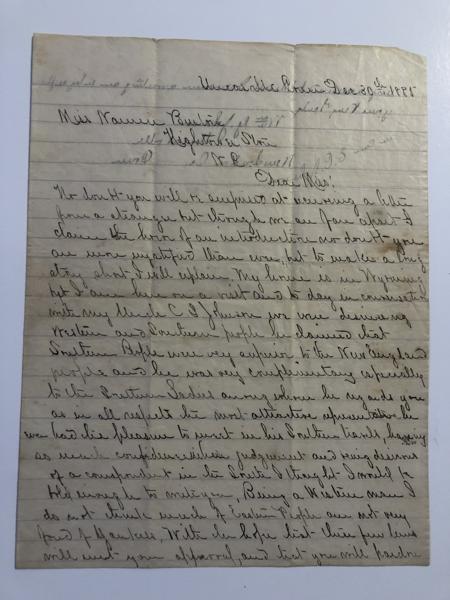
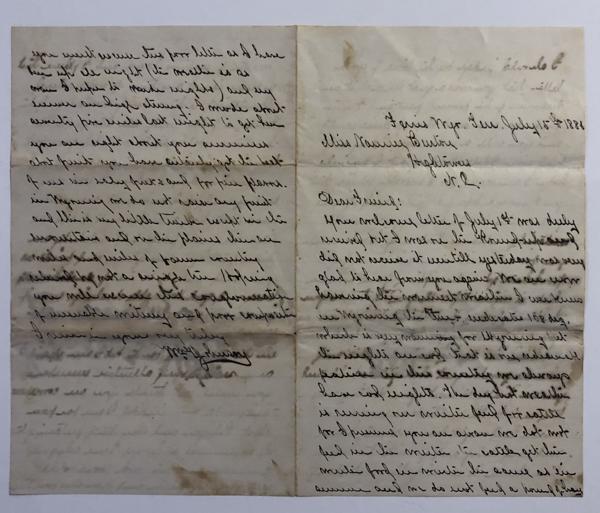
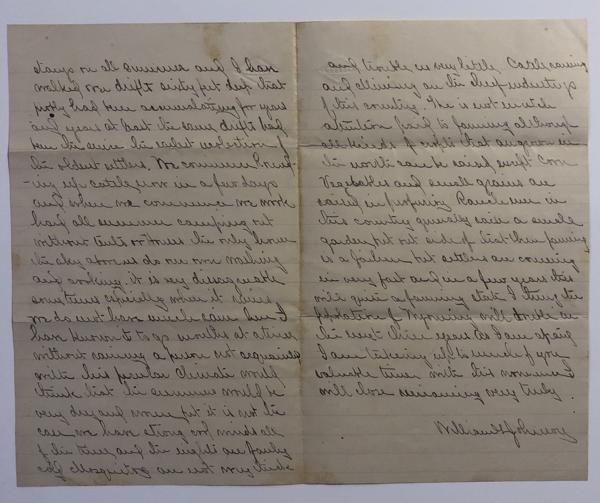
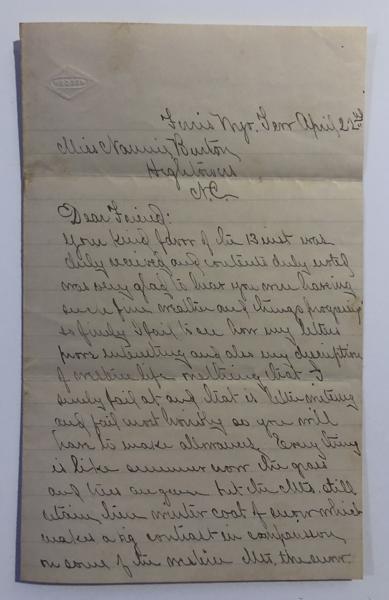
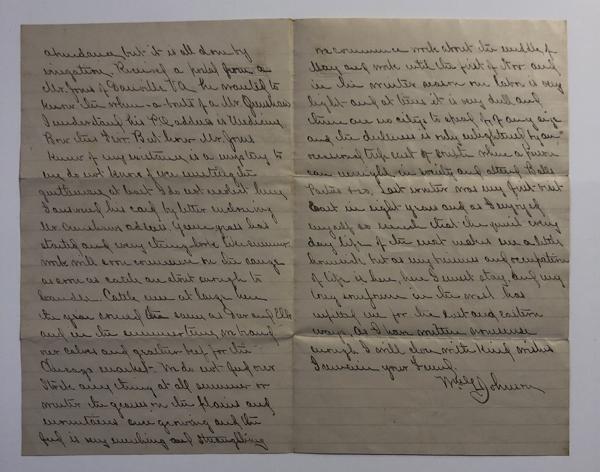
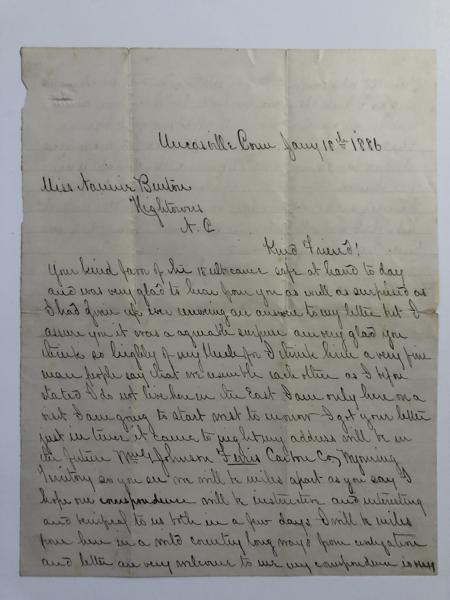
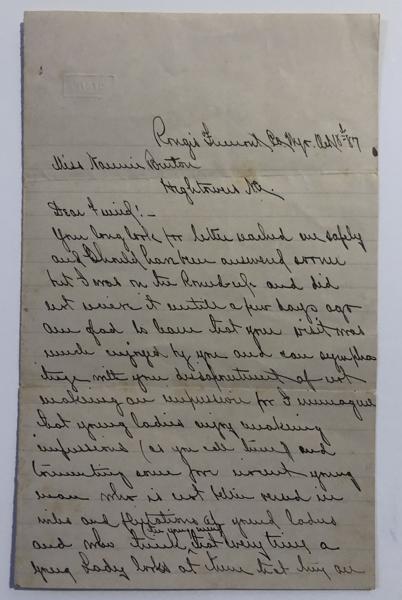
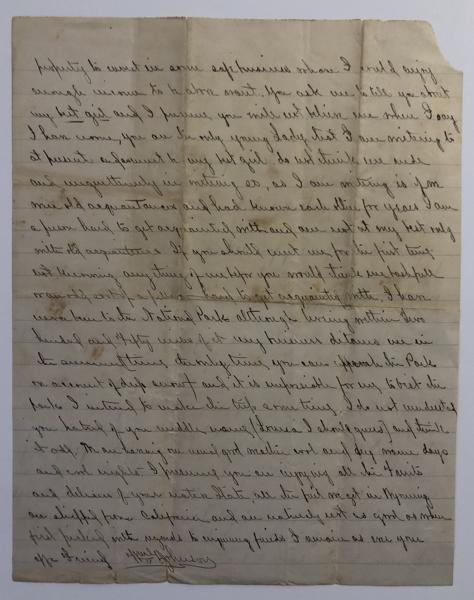
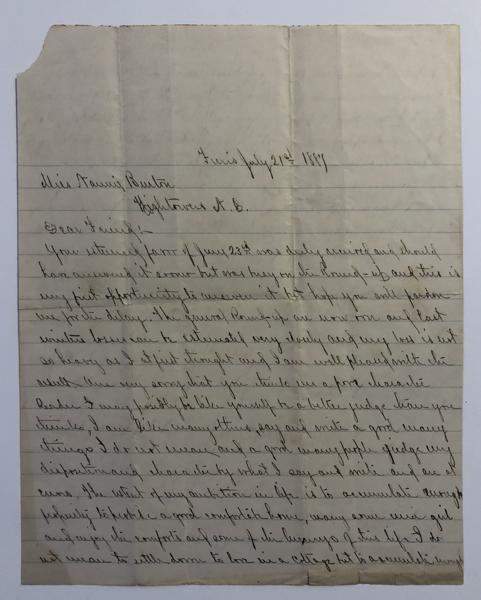
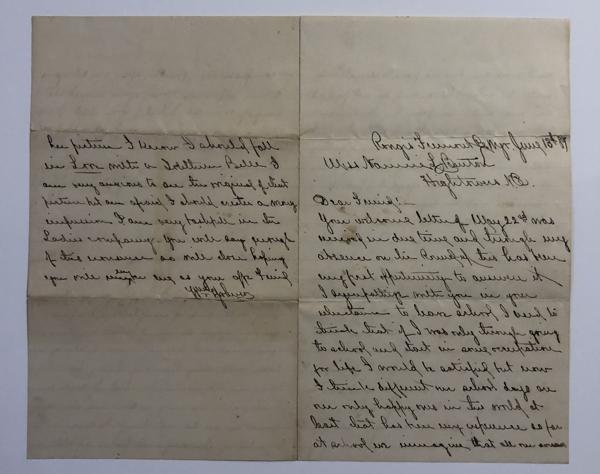
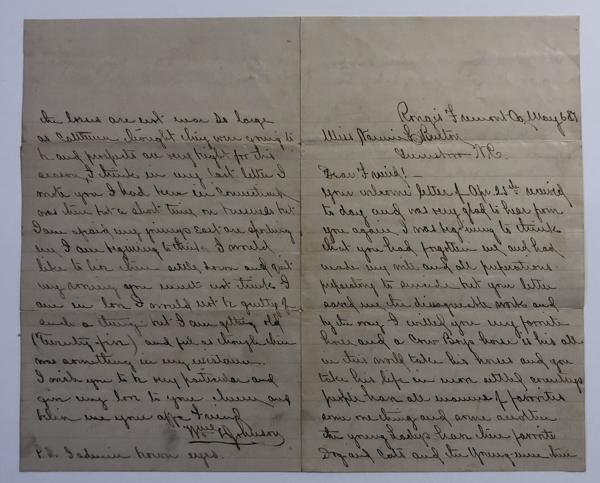
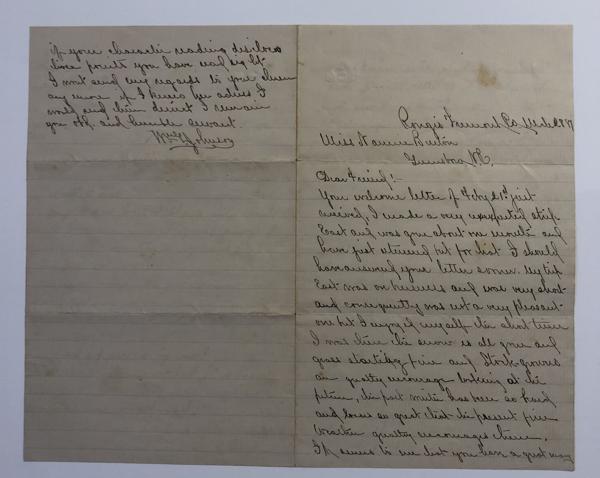
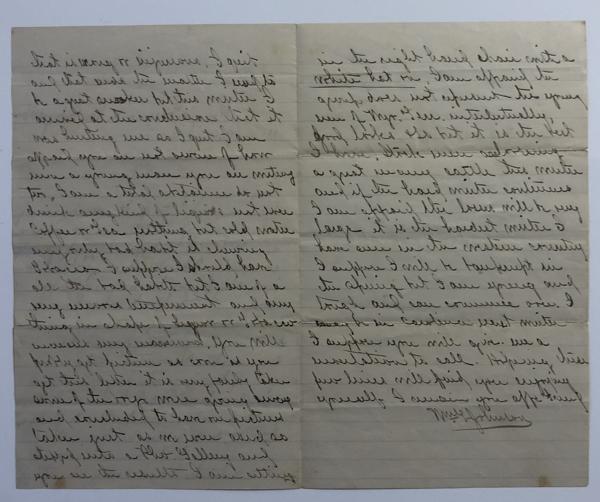
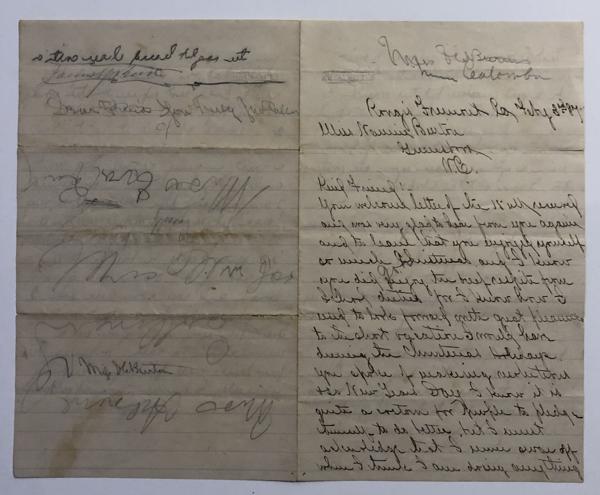
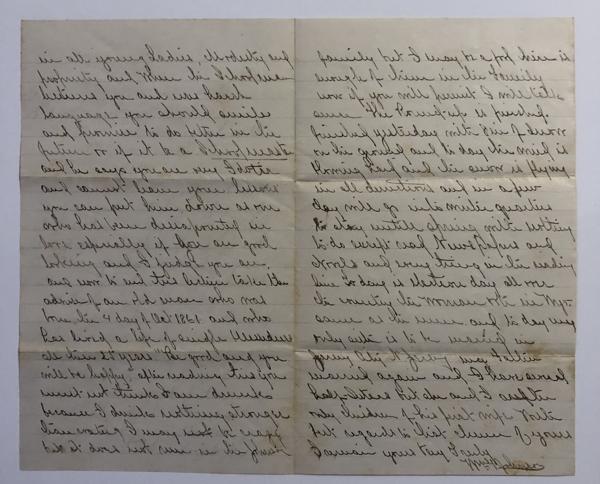
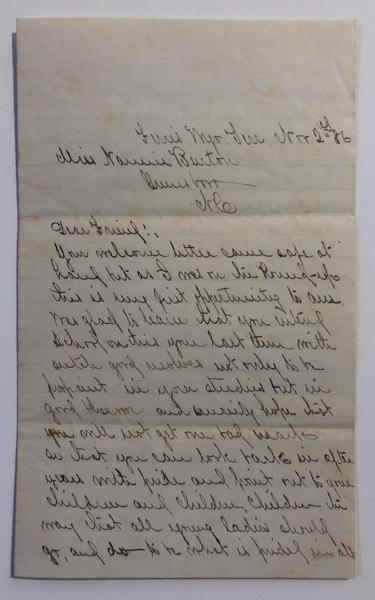
Archive Of 15 Manuscript Letters From Wyoming Pioneer And Cowboy, William Johnson, To Miss Nannie Burton Of North Carolina
JOHNSON WILLIAM G.
Other works by JOHNSON WILLIAM G.Publication: 1885-1888, Ferris and Rongis, Wyoming Territory
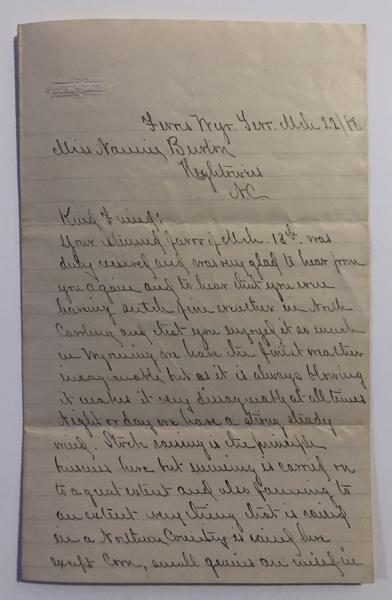
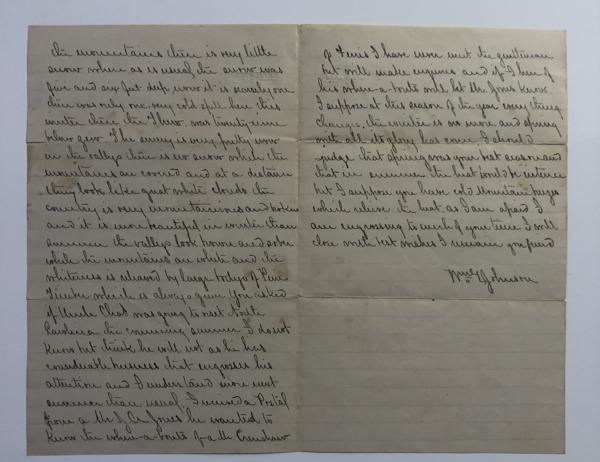
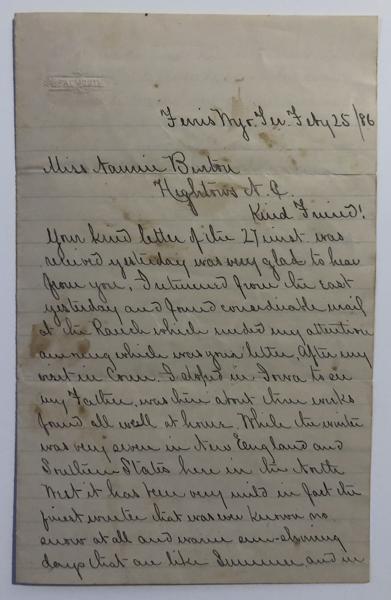
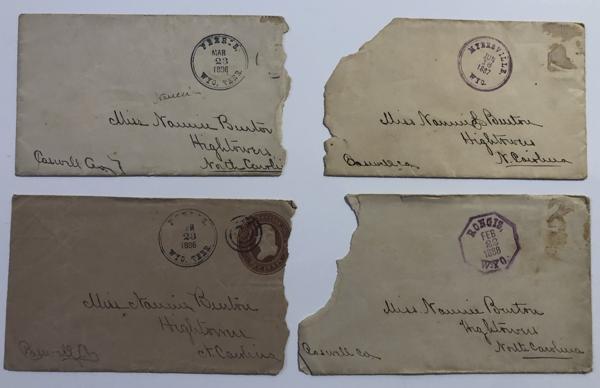
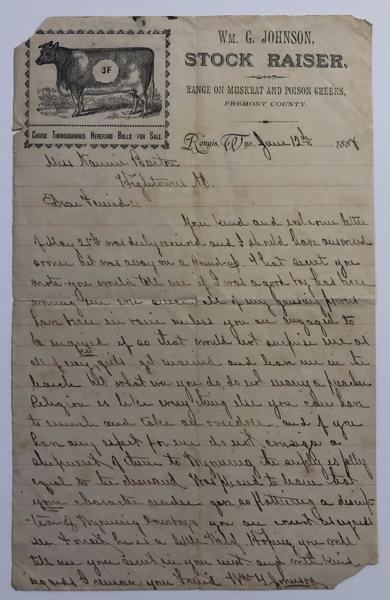
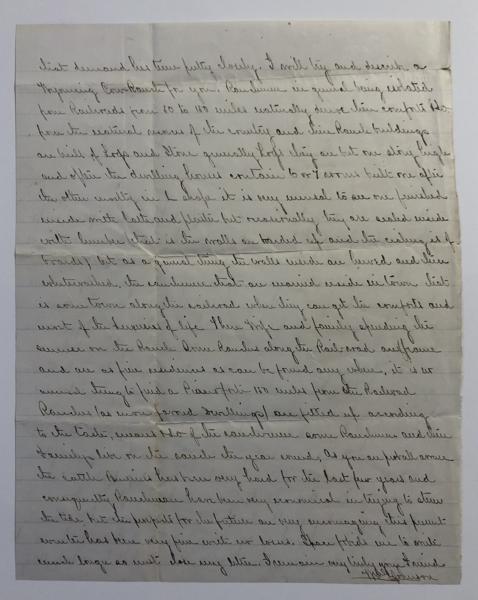
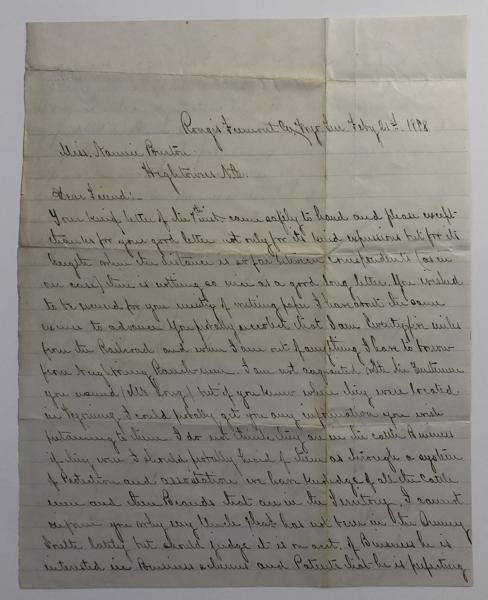
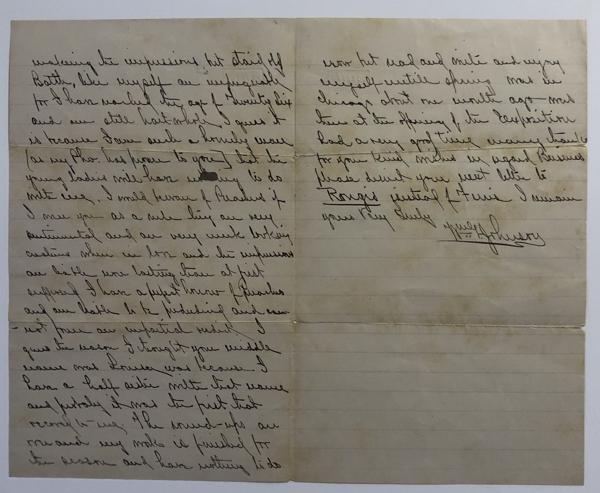
15 Manuscript Letters, each 1-4 pages, 43 pages total. 4 accompanying envelopes. Born in Connecticut in 1861, upon the death of his mother, Billy went to live with relatives, eventually joining his father on a farm near Des Moines, Iowa. In 1879, at the age of 18 , Billy went west. He stayed briefly in Cheyenne, but ended up in Colorado, where he worked on a ranch. Two years later, Billy returned to Wyoming and went to work in Carbon County for early pioneer rancher, Tom Sun. Sun had a ranch in the Sweetwater country, having built a cabin near Devil's Gate in 1872; now a National Historic Landmark. Billy's letters provide great descriptions of the area, but more important, they provide detailed descriptions of all aspects of ranching and stock raising in the remote Wyoming Territory. As a collection, Billy's correspondence offers a rare, first-hand account of life on the range, written by an actual cowboy during the final years of the Wyoming cattle boom. Especially valued are Billy's letters immediately preceding, during, and after the disastrously harsh Winter of 1886-87, during which thousands of cattle died, bankrupting many ranchers. "We are now having the meanest weather I ever knew in Wyoming. The temp. indicates 108 deg. which is very warm for Wyoming...The dry hot weather is ruining our winter feed for cattle for I presume you are aware we do not feed in the winter. The cattle get their winter food in winter the same as in summer and we do not feed a pound of hay."-July 15, 1886. The early arrival of winter is a further concern. "The Round-up is finished, finished yesterday with 8 in. of snow on the ground and to day the wind is blowing hard and the snow is flying in all directions and in a few days we will go into winter quarters to stay until spring with nothing to do except read..."- November 2, 1886. Three months later the worst is unfolding. "Stock men are losing a great many cattle this winter and if the hard winter continues I am afraid the losses will be very large it is the harshest winter I have ever seen in the western country I suppose I will be bankrupt in the spring but I am young and tough and can commence over."-February 3, 1887. Altogether, Johnson's letters from July, 1886 to March, 1887 are one of the only contemporary, first-hand accounts of the disastrous period known as the Big Die-Up, which severely impacted Wyoming's cattle boom. In his letters, Billy describes his day-to-day life as a cowboy...seasonal changes, branding, roundups, and the relationship between a cowboy and his horse. After 5 years of working for Tom Sun, Billy bought his own small spread in late 1887. He must have enjoyed some success as his letter of June, 1888, the final letter in the archive, is written on his own letterhead, identifying himself as: "Wm. G. Johnson, Stock Raiser, Range on Muskrat and Poison Creeks, Fremont County", including an engraved illustration of a Hereford Bull. Miss Nellie Burton saved these letters for the rest of her life. Billy Johnson stayed in Wyoming, marrying Ellen Heenan of Lander, later serving as Mayor of Lander, sheriff of Fremont County, and state legislator in Cheyenne. The letters are quite charming as Billy courted a young lady that he never met. The record that they provide of the sometimes lonely life of a cowboy in Wyoming is an important record in itself, but his anticipation of the terrible winter and his personal observations of the impact it had on Wyoming's cattle industry is a valuable historic record. The letters show some light wear and soiling, with 4 accompanying envelopes. Very Good. Additional information available upon request.
Inventory Number: 54494$9,950.00
![In The Land Of Chinook Or The Story Of Blaine County NOYES, AL. J. [AJAX]](/media/images/thumb/54312.jpg)