Dealer in Rare and First-Edition Books: Western Americana; Mystery, Detective, and Espionage Fiction
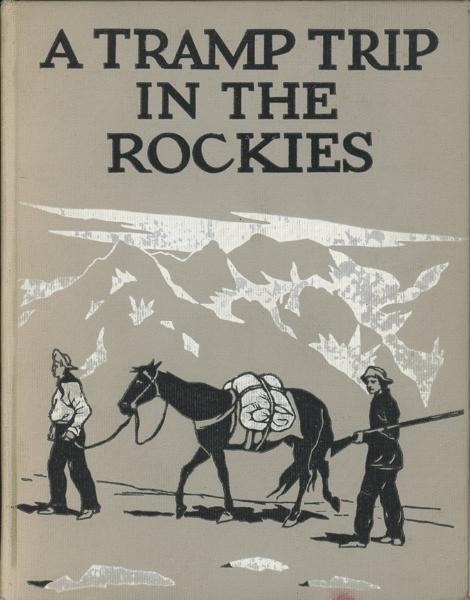
A Tramp Trip In The Rockies Of Colorado And Wyoming
W. S. FRANKLIN
Other works by W. S. FRANKLINPublication: The New Era Printing Company, 1903, Lancaster
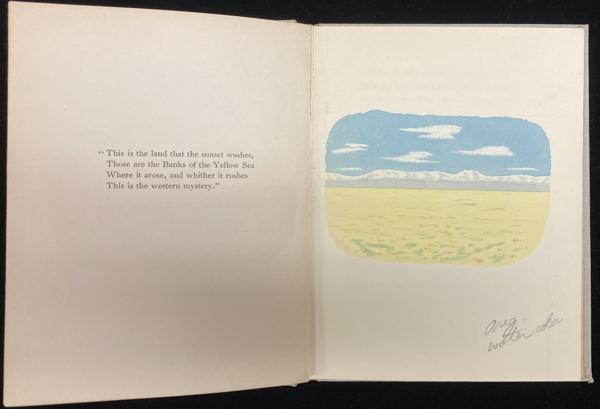
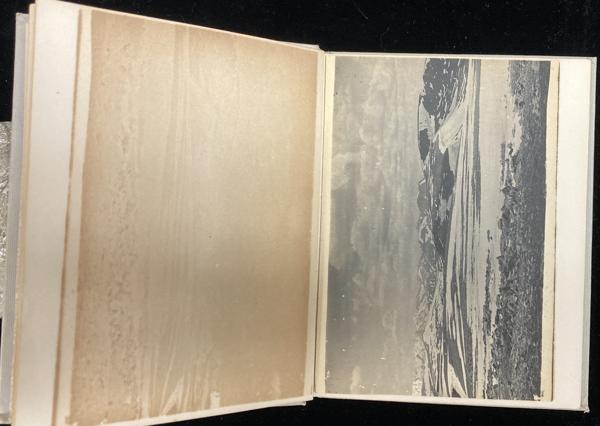
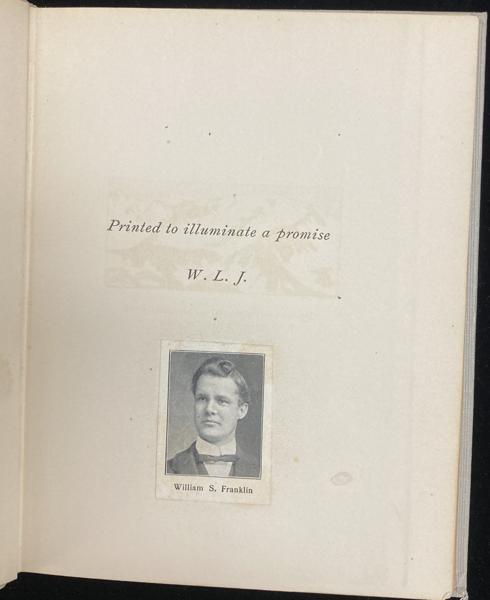
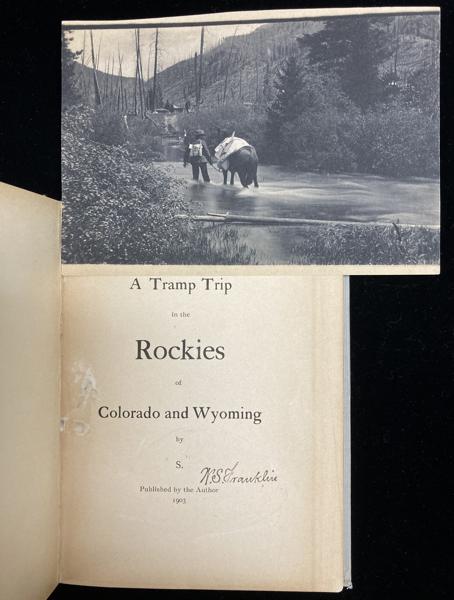
First edition in original gray boards. 56pp. 12mo, [7], 56pp. Illustrations. Original watercolor (likely by the author?) tipped in, along with three original photographs (captioned on the versos) either attached or previously attached with adhesive. Signed by Franklin on the title page with a small portrait of him clipped and adhered to the dedication page.
The book is a privately printed account of a 33-day expedition by William Suddards Franklin, an American physicist, electrical engineer, and educator and a sixteen-year-old college sophomore, whom he identifies throughout the narrative simply as "D."
Research identifies "D" as Edwin MacDonald Stanton, known as "Don," born in 1879 and later becoming a surgeon. He was the son of Margaret MacDonald Stanton and her husband, Edgar W. Stanton. Identity was able to be determined because at the end of the book, "D" went home only to find his mother very ill and who passed away just four days after his return. "A beautiful Campanile now stands on the college campus erected in memory of D.'s mother by the state of Iowa; and from this memory-tower a chime of bells, placed by D.'s father." The Campanile at Iowa State University in Ames, Iowa, is one of the university’s most famous landmarks and a major symbol of Iowa State. The tower was constructed in 1897–1898 to commemorate Margaret MacDonald Stanton, Iowa State's first dean of women. Her husband, Edgar W. Stanton, donated the original bells.
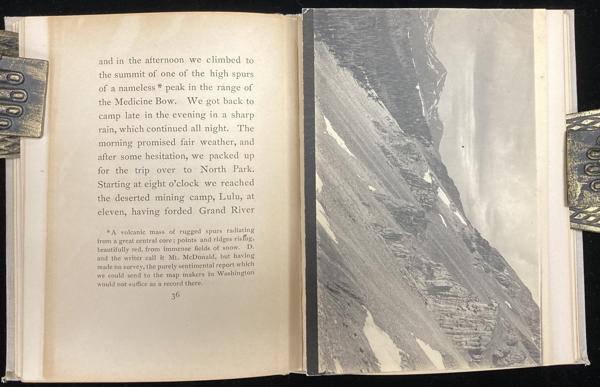
The two men left Iowa at the end of the college term, traveled to Denver, bought supplies, and then went to Loveland. From there they began their journey on foot. They also purchased a pony and pack saddle, which immediately presented a problem because the pony had never been broken to the saddle. They traveled through Denver, to Loveland, Estes Park, over the Continental Divide/Milner Pass, Grand River, through the Grand Lake region, Medicine Bow Mountains, North Park, Rabbit's Ear Range and finally to Laramie. Franklin describes snow, fallen timber, mud, swollen streams, mosquitoes, rain and difficult trails. At one point they had to ford the Grand River seven times in a single day, eventually crossing the Medicine Bow range at the Bucking Horse Pass. On their trek, they spent time with E. B. Gould, a local hunter and trapper who lived in a shanty and survived largely by hunting, trapping and odd jobs. Gould was so impressed by the two "tenderfoots" that he decided to travel with them for a while. They hunted deer and elk and spent the Fourth of July in the Medicine Bow Mountains.
Franklin's E. B. Gould was almost certainly Edward Bradley Gould. The evidence lines up unusually well ... Franklin identifies his companion simply as "E. B. Gould" and says he was a hunter, trapper, and seasonal worker living in southeastern North Park. Franklin says Gould had previously taken up a claim there, abandoned it, traveled overland to New Mexico, and then returned to his old shanty. Project Gutenberg, The National Register of Historic Places history for the Colorado State Forest Building Complex, identifies an Edward Gould, a Bostonian who moved to Laramie, Wyoming, as a teenager in the 1880s. It says he took up a North Park homestead in 1885, helped construct some of the earliest buildings in Walden, and later returned to his homestead. Other Colorado historical sources further identify Gould as a man who homesteaded approximately 640 acres in North Park. The community of Gould, Colorado, was ultimately named for him.
Finally, Franklin and D. reached the Laramie plains. Their feet were badly blistered, so they abandoned their original plan of walking all the way into Laramie, sold the pony for five dollars, and took a stagecoach.
They had been away from home 33 days, spending 31 nights in the mountains, and Franklin estimated that they had walked more than 350 miles.
Some wear and scuffing at hinges where photos were attached and have pulled away along with toning to pages where photos are inserted. Cover boards with light soiling as well as rubbing to corner and spine tips, else clean internally and very good. A nicely printed Rocky Mountain narrative uncommonly encountered in the trade.
Inventory Number: 54559$750.00